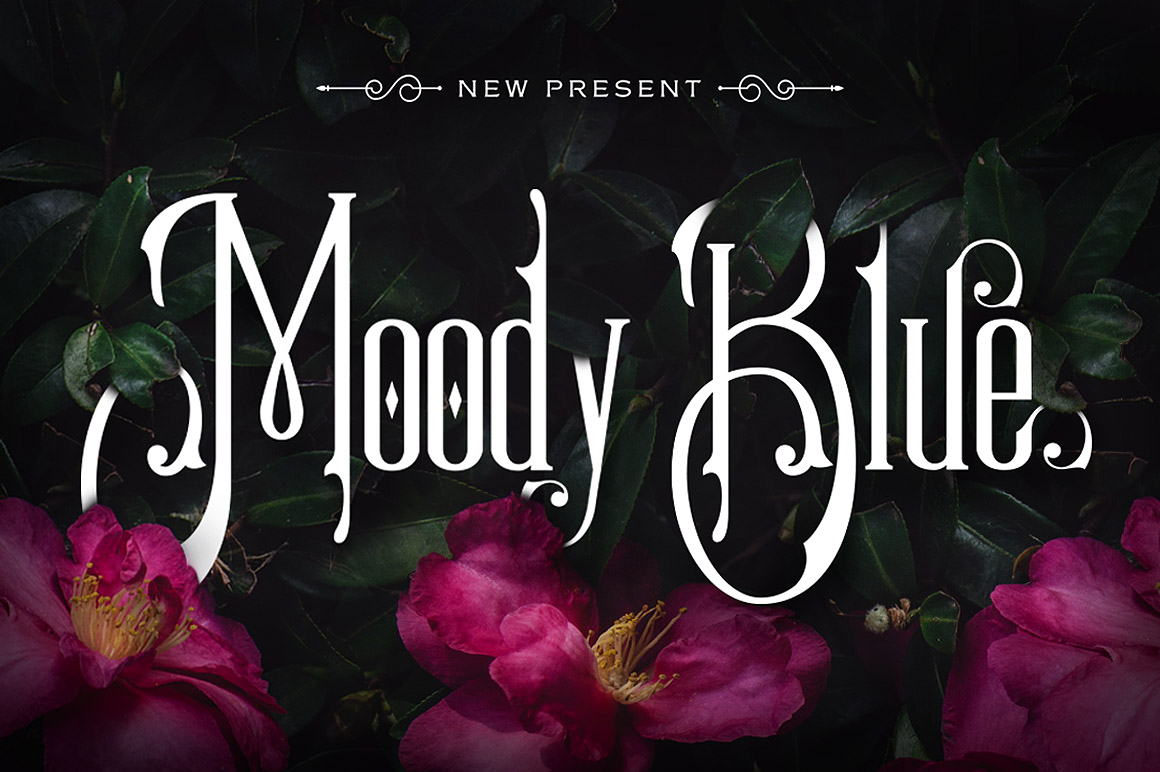
Moody Blue Font: Vintage Charm for Handmade Products
The late afternoon light was just right when I pulled up the first mockup. I had been working on a new candle label design for a small batch of soy wax jars, and I needed something that felt like an old book cover but still looked clean enough to print at two inches wide. I had tried a few serif fonts, a couple of scripts, and one overly ornate display font that completely fell apart when I ran it through my printer. Then I opened Moody Blue, typed the candle name, and watched the whole label come together in a way that felt almost effortless.
Moody Blue is a decorative typeface that carries a quiet, nostalgic weight. It has the kind of presence you expect from vintage book covers, classic editorial design, and old apothecary labels. The letterforms are beautifully crafted, with a rhythm that feels intentional without being stiff. There is a graceful contrast between thick and thin strokes, and the overall shape language leans into a refined, slightly moody aesthetic that suits so many handmade product categories. Whether you are designing candle labels, greeting cards, wedding invitations, or printable wall art, this font brings a layer of warmth and sophistication that is hard to replicate with more generic typefaces.
What struck me first was how naturally Moody Blue settled into the candle label mockup. The fragrance name sat centered above a simple botanical illustration, and the typeface gave the whole composition a quiet sense of heritage. It did not scream for attention, but it held the eye. That is the kind of quality you want in a display font for product packaging. When a customer picks up a jar, the label should feel like part of the object, not just a sticker slapped on top. Moody Blue has that ability to fuse with the material it is printed on, whether that is textured kraft paper, glossy label stock, or smooth cotton card.
Seeing Moody Blue Come to Life on Product Labels
I printed a small test sheet of candle labels on matte sticker paper, trimming each one carefully and wrapping them around amber glass jars. The font held its detail beautifully at a modest point size. The delicate serifs did not break, the thin strokes remained visible, and the overall impression was one of quiet luxury. For makers who sell at craft fairs, farmers markets, or online shops, this kind of perceived quality can transform a simple product into something that feels intentional and giftable. A well-chosen decorative font like Moody Blue communicates care before the customer even reads the words.
Beyond candles, I started imagining this typeface on other products. Soap boxes, room spray bottles, linen spray labels, and reed diffuser packaging all benefit from that same vintage, editorial feel. Moody Blue works beautifully as a primary display font for product names, scent titles, or short descriptive phrases. I would not recommend it for long ingredient lists or fine print instructions, but that is true of most decorative typefaces. For the hero text, the part that makes someone stop scrolling and click, Moody Blue is a strong choice.
Greeting Cards, Invitations, and Wedding Stationery
The next project I tested was a set of birthday invitation mockups. I paired Moody Blue with a clean sans serif for the event details, using the decorative font for the name and the date. The contrast was lovely. The serif letterforms of Moody Blue have a gentle formality that suits milestone celebrations, anniversary parties, and bridal shower invitations. On a cream cardstock background, the typeface felt timeless. On a darker, moody floral background, it took on an entirely different character, almost literary, like the title page of a vintage novel.
Wedding stationery is another natural fit. Couples looking for something that feels classic but not overly formal will appreciate the way Moody Blue handles names, table numbers, and welcome signage. Because the font has such a distinct personality, it does not need much embellishment. A simple monogram or a paired back flourish is often enough. For invitation designers who sell digital templates, this typeface can become a signature element in a cohesive suite, tying together save-the-dates, programs, menus, and thank-you cards with a consistent visual voice.
Planner Pages, Stickers, and Digital Printables
I have spent a fair amount of time designing planner pages, and I know how tricky it can be to find a font that feels decorative but remains legible at smaller sizes. Moody Blue surprised me here. On a weekly planner spread, I used it for the month header and the day labels, and it added just enough personality without making the layout feel cluttered. For printable sticker sheets, especially those designed for Cricut or Silhouette users, the font cuts cleanly when the letters are properly spaced and sized. I tested a sheet of functional planner stickers with words like "appointment," "deadline," "self-care," and "brunch," and the font held up well, even with the intricate letter connections.
Digital printable sellers can use Moody Blue to create wall art, quote prints, and affirmation cards that feel elevated. A short phrase like "slow mornings and strong coffee" set in this typeface becomes something people want to frame. The mood is warm, a little introspective, and highly marketable to buyers who love farmhouse decor, cottagecore aesthetics, or vintage-inspired home styling. The font adds emotional weight to simple words, and that is a powerful tool for anyone creating printable products for Etsy or their own e-commerce shop.
Boutique Tags, Packaging, and Branding Elements
Small shop owners know that packaging is part of the product experience. A jewelry tag, a thank-you card tucked into a shipping box, or a branded belly band around a folded shirt, all of these touchpoints matter. Moody Blue works wonderfully for boutique tags and hang tags. I mocked up a small clothing tag with a shop name and a short care instruction line, and the result felt like something you would find at a high-end market. The typeface has a boutique quality that is hard to describe but easy to recognize. It feels curated.
For makers who sell mugs, tote bags, or apparel, Moody Blue can be used for short phrases, names, or decorative wording on heat transfer vinyl designs. When cut with a Cricut or Silhouette machine, the font requires some attention to weeding, especially around the thinner strokes and serifs, but the final result is worth the extra care. A simple tote bag with a single word like "flourish" or "gather" in Moody Blue becomes a statement piece. The same principle applies to throw pillows, tea towels, and canvas signs.
Seasonal Products and Holiday Crafting
As the seasons shift, so do the product lines. Moody Blue has a versatility that stretches across holiday releases. I designed a set of gift tags for the winter season, using the font for names and short greetings. Against a deep burgundy background with gold foil accents, the typeface looked rich and celebratory. For spring markets, I can see it working on seed packet labels, plant markers, and floral arrangement tags. Summer brings outdoor markets and wedding season, both of which pair beautifully with the font's vintage charm. Autumn calls for pumpkin-scented everything, and Moody Blue on a candle label with a warm spice fragrance name feels like a bestseller waiting to happen.
Font Pairing and Design Flexibility
One of the most practical considerations when choosing a decorative font is how well it pairs with other typefaces. Moody Blue shines when paired with a clean sans serif for body text or supporting details. A simple geometric sans serif can ground the design and keep it readable, while a light handwritten font or a subtle script font can add warmth without competing. I have also paired it with a bold serif for a more editorial look, and the combination felt balanced and intentional. The key is to let Moody Blue carry the visual weight while the supporting font handles the functional text.
For social media graphics, product listing images, and mockup previews, Moody Blue helps create a consistent brand identity. When a shop uses the same typeface across all their visual assets, customers begin to associate that style with the brand. Recognition builds trust, and trust leads to sales. In a crowded market, small design choices like font selection can make a meaningful difference in how a product is perceived.
Readability, Cutting Machines, and Production Tips
When working with any decorative font, it is important to test it at the actual size it will be printed or cut. Moody Blue performs best at display sizes, typically above 12 points for print and even larger for cutting machine projects. For small stickers, I recommend running a test cut on scrap material first. The delicate serifs and thin strokes may require a slightly adjusted cut setting or a bit of patience during weeding, but the finished product is worth the effort. For printed labels and cards, the font reproduces cleanly on both inkjet and laser printers, and it holds up well on textured paper stocks.
If you are creating digital templates or printables for customers to use with their own cutting machines, consider providing sizing guidance and recommended settings. A quick note about optimal point size and weeding tips can go a long way toward a positive customer experience.
Licensing, File Formats, and Commercial Use
Before listing any product that uses Moody Blue, take the time to review the included styles, alternates, ligatures, and file formats. Some decorative fonts include swashes, stylistic alternates, or multiple weights that can expand your design options significantly. Check whether the font supports multilingual characters if you plan to sell internationally or design for a diverse audience. Most importantly, confirm that the commercial font licensing covers your intended use. Selling physical products, digital downloads, templates, or merchandise typically requires a commercial license, and understanding those terms upfront protects your business and respects the type designer's work.
Moody Blue is the kind of typeface that becomes a staple in a maker's design toolkit. It has a distinct personality, a timeless quality, and the flexibility to work across a wide range of handmade products. From the first candle label mockup to the final printed invitation, this font brings a sense of craft and consideration to everything it touches.